June 15th, 2016

Nobody likes a dry mouth. It is an uncomfortable and sometimes oddly unexplainable sensation that most people like to avoid. It is not a condition that automatically sends you into a panic about your health, however, a dry mouth can be a bother and something you certainly want to change if possible. So, if you find yourself in the unpleasant position of having a dry mouth, here is what you can do.
Chew Sugar-free Gum: Chewing sugar-free gum will stimulate saliva in your mouth. The chewing motion of your jaw and teeth should take care of at least some of your dry mouth problem.
Suck on Sugar-free Candy: Similarly to chewing sugar free gum, if you suck on sugar free candy it should create more saliva in your mouth and moisturize it in the process.
Cut out the Caffeine:Caffeine can contribute to a dry mouth so by limiting, or eliminating your intake all together, you may find that your dry mouth is no more.
Stop Using Tobacco Products: Tobacco is another cause of dry mouth. Whether it is smokeless tobacco products or cigarettes, if you stop using them your dry mouth will likely improve. And not to forget, these products are exceedingly bad for your oral health to begin with, so you will be doing your mouth a favor even more so.
Drink Lots of Water: It may seem obvious, but drinking lots of water will likely improve your dry mouth. This is because dry mouth is usually a sign of dehydration, so plenty of fluids will surely help.
Dry mouth can be unpleasant, but it is often easily solved by either drinking more water, or trying one of the previously mentioned techniques. If the problem still persists you can always visit our Columbus, OH office to see Dr. Dennis Johnson. More often than not, doing one of the above will leave your mouth more moisturized than it was previously, and hopefully it will be long-lasting as well.
June 8th, 2016
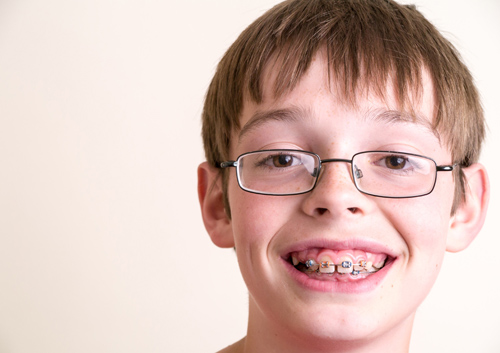
The average age of individuals who get braces is between nine and 14, although it is appropriate for younger children to visit Johnson Orthodontics for a consultation with Dr. Dennis Johnson. While parents may be concerned about the efficacy of early orthodontics, research suggests that early intervention can prevent greater dental health problems later in life.
What types of conditions require early intervention?
According to the American Association of Orthodontists, 3.7 million children under the age of 17 receive orthodontic treatment each year. Early intervention may be appropriate for younger children with crooked teeth, jaw misalignment, and other common issues. Early orthodontic treatment may be of use for several types of problems:
- Class I malocclusion. This condition is very common. It features crooked teeth or those that protrude at abnormal angles. In general, early treatment for Class I malocclusion occurs in two phases, each two years long.
- Class III malocclusion. Known as an underbite, in which the lower jaw is too big or the upper jaw too small, Class III malocclusion requires early intervention. Because treatment involves changing growth patterns, starting as early as age seven is a smart choice for this dental problem.
- Crossbite. Crossbite occurs when the upper and lower jaws are not properly aligned. An orthodontic device called a palatal expander widens the upper jaw, allowing teeth to align properly. Research suggests that early treatment may be beneficial in crossbite cases, especially when the jaw must shift laterally to correct the problem.
- Tooth extraction. That mouthful of crooked baby teeth can cause problems when your child’s permanent teeth erupt. For kids with especially full mouths, extracting baby teeth and even permanent premolars can help adult teeth grow in straight.
Considerations when thinking about early intervention
Early intervention isn’t helpful for all conditions. For example, research suggests that there is little benefit to early orthodontics for Class II malocclusion (commonly known as an overbite). Instead, your child should wait until adolescence to begin treatment. Scheduling a visit to our Columbus, OH office when your child is around age seven is a smart way to create an individualized treatment plan that addresses unique orthodontic needs.
June 1st, 2016

As we start our summer, our team at Johnson Orthodontics wants to remind our patients who have completed treatment that it is very important to wear your retainer as prescribed even while away for vacations and summer camps.
If you are away from home and only wearing your retainer at night, here is a helpful tip: after removing and brushing your retainer in the morning, place it back in the case and then put it with your PJ’s or on your pillow. That way you have a reminder to put your retainer back in at night.
Remember, retainers should be worn every night, not just some nights.
We wish you safe travels and adventures this summer!
May 25th, 2016

Memorial Day didn't become an official holiday until 1971, but Americans started gathering annually in the spring to remember those who lost their lives in war during the 1860s, right after the Civil War. Celebrated on the last Monday in May, people still decorate the grave sites of war veterans and hold memorial services, but Memorial Day has also evolved into a day that signifies the beginning of summer.
During the summer months, many people take road trips to visit family members. Some head off to the airport to enjoy a long-awaited vacation far away, while others look forward to spending time with friends and family at home. However you spend Memorial Day and the subsequent summer months, there are a few things you can take care of to ensure your summertime is enjoyable.
Checklist for an Enjoyable Summer
- Have the AC Checked. During the hottest days of summer, many families find themselves sweating it out due to a broken air conditioning system. Be proactive so you can avoid waiting for hours or days because the HVAC repair person is booked solid. Have your air conditioning system checked before or around Memorial Day each year.
- Ensure Security While You're Away. When you leave for vacation, the last thing you should have to worry about is the security of your home. Install a home security system, if possible, and put a timer on your lights so they go on and off at normal hours. You can also alert your local police department that you'll be gone, and ask them to drive by your house once in a while to make sure everything is okay.
- Visit Dr. Dennis Johnson Before Vacation. Many people put off exams until after summer vacation. Avoid the crowds and make sure your physical and oral health are in top shape prior to vacation time so there are no unpleasant surprises.
Our team at Johnson Orthodontics wants you to look forward to Memorial Day and the days of summer by preparing to spend the time safely and comfortably. As you plan ahead, take care of your health and secure your home, you can place your focus on creating memories with family members and friends while enjoying your favorite Memorial Day traditions.


 Website Powered by Sesame 24-7™