July 13th, 2016
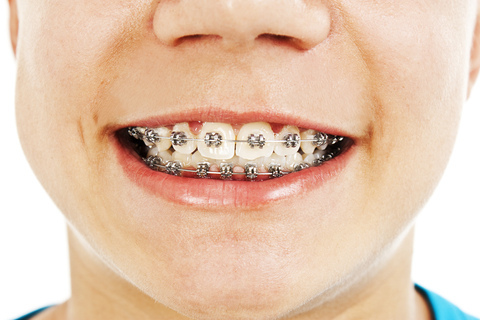
Perhaps you feel your teeth are not perfectly straight, or you think your bite could be adjusted. It’s quite possible that braces and other orthodontic treatments might be the right choice for you. As orthodontic professionals, our team at Johnson Orthodontics works with your general dentist in order to determine the best options for your oral health and cosmetic appearance.
You might need braces if ...
- You lost your baby teeth relatively early in life. If your baby teeth fell out too early and your adult teeth did not come in for a while, this could have affected the way your adult teeth grew and developed.
- Your teeth look crowded or crooked. If you are embarrassed to smile because your teeth are not straight, it might be time to consider the cosmetic options available to you.
- Your jaw shifts or makes sounds. This can signify a developmental issue with your teeth and your jaw line, and orthodontic treatment may be able to help. Set up an appointment with Dr. Dennis Johnson if your jaw is recessed or protruding as well.
- You are constantly biting the sides of your cheek or hitting the roof of your mouth. This could indicate that your teeth are not properly aligned. Braces can address an underbite or an overbite.
- You have a difficult time chewing your food. This is not only an inconvenience, but it can also be detrimental for your health. Braces can help fix the alignment of your teeth.
- You have to breathe through your mouth on a regular basis. You may not attribute this to an issue with the development of your teeth or jaw, but orthodontic treatment might be able to help.
The ideal age for a child to be seen by an orthodontist is age seven. However, there are many orthodontic treatment options available to adults. It is becoming increasingly common for adults to wear braces and other orthodontic devices. We recommend that people who are interested in braces and other orthodontic treatment options set up a consultation appointment with Dr. Dennis Johnson today.
July 6th, 2016

The dog days of summer are upon us, and what better time for Dr. Dennis Johnson and our team to ask our patients about their summer!
Whether you visited our nation’s capital, went on a camping trip, or just stayed in Columbus, OH and relaxed, we want to know how you’re all spending your summer! Please feel free to share your summer plans and experiences with us below or on our Facebook page as summer rolls on!
June 29th, 2016

Happy Independence Day from Dr. Dennis Johnson and team! The Fourth of July celebrations in America may have changed a lot over the years, but there is no doubt that we Americans love to celebrate the anniversary of our country's independence! Today we're devoting the Johnson Orthodontics blog to some fun facts about the Fourth!
- My, how we have grown! This year the United States Census Bureau estimates that our country has 313.9 million residents celebrating the Fourth of July this year, but back in 1776 there were just 2.5 million members of the country.
- Our country loves to show how proud that we are of our independence. Did you know that there are 31 United States places with the word “Liberty” in their names? The state of Iowa actually has four towns with the word Liberty in the name: Libertyville, New Liberty, North Liberty, and West Liberty.
- The United States loves Fourth of July food! It is expected that around 150 million hot dogs are eaten on the Fourth each year. One of the Fourth's most popular sides, potato salad, goes just perfectly with the hotdogs and hamburgers that are standard Fourth of July fare. Some people choose potato chips instead, but we wouldn't have such a plethora of potatoes if not for the prodigious production of the states of Idaho and Washington -- they provide about half of all the potatoes in the United States today!
- Americans love celebrating the Fourth outdoors: About 74 million Americans fire up their BBQ grill every Fourth of July.
- The Chinese contribution: Did you know that Americans have spent more than $211 million on fireworks that were imported from China?
No matter how your family chooses to celebrate the Fourth, stay safe, take precautions, and don't forget to brush after your fabulous Fourth feast!
June 22nd, 2016

While it’s normal to feel self-conscious, there is no reason to avoid photos just because you wear braces. Many people wear braces and you do not need to be embarrassed about them. There are also ways you can enjoy your photos without hiding your smile.
Make it Fun
Dr. Dennis Johnson and our staff offer rubber bands for braces in a wide range of colors. Choose your favorite color and wear it with pride. You can mix and match your colors too. For Valentine’s Day, try alternating red and pink bands. For the Fourth of July, use red, white, and blue!
Bands are also available in neon colors and glow-in-the-dark designs. Your imagination is the only thing holding you back. You might want to avoid using dark green bands, though. It makes it look as though you have broccoli stuck in your teeth. Gross!
Make them Disappear
If your braces still really bother you in photos, technology can quickly solve the problem. A photo-editing program, or even a simple paint program, can easily erase your braces. Zoom in on your teeth, pick your natural tooth color with the dropper, and paint your braces away.
If you have a significant amount of metal in your braces, try to avoid close-ups with flash. The flash can reflect off the metal. The important thing to remember is how good your teeth will look and feel once your orthodontic work is complete. Dr. Dennis Johnson and our staff can also show you options for braces that are not as visible as the traditional style.


 Website Powered by Sesame 24-7™